FREE STANDARD US SHIPPING ON ALL TUMBLERS


The Splitflask guide
Can You Drink on a GLP-1? Alcohol, Water, and Electrolytes

Yes — you can usually drink alcohol on a GLP-1, but the bigger drinking question is water. GLP-1 medications blunt thirst and cause fluid loss, so most people need roughly 2–3 litres (68–101 oz) of fluid a day and have to drink on a schedule rather than waiting to feel thirsty. Here's what to put in your bottle.
Can you drink alcohol on a GLP-1?
For most people, yes. There is no known direct pharmacological interaction between alcohol and semaglutide, and the FDA-approved labelling for these medications carries no alcohol warning. That is not the same as "drink freely," though — the interaction that matters is with the side effects, not the drug itself.
Four things worth knowing before you pour one:
- Low blood sugar. Alcohol and GLP-1s both lower blood glucose. If you also take insulin or a sulfonylurea, that stacking is the real risk — not the GLP-1 alone.
- Pancreatitis. Semaglutide carries a pancreatitis warning, and heavy alcohol use is itself a leading cause of chronic pancreatitis. The concern is about combining heavy drinking with the medication.
- Amplified nausea. Alcohol and GLP-1s cause overlapping GI symptoms — nausea, vomiting, appetite loss. A glass of wine that used to be uneventful can land differently.
- You may feel it faster. Plenty of people report a lower tolerance. The likely explanation is eating far less and losing weight, rather than the drug altering alcohol metabolism directly.
There is no GLP-1-specific drinking limit published. Standard guidance — up to one drink a day for women, two for men — is the usual starting point, and your prescriber is the person to set your actual number. One genuinely interesting wrinkle: a clinical trial found semaglutide significantly reduced alcohol cravings in people with alcohol use disorder, so some users find they simply want it less.
How much water should you drink a day?
For a healthy adult, the widely cited target is about 2.7 litres (11.5 cups) a day for women and 3.7 litres (15.5 cups) for men — but that figure counts all fluid, including what you get from food. Roughly 20% of daily fluid intake comes from food, which is why beverage-only guidance runs lower: the Academy of Nutrition and Dietetics suggests about 2.1 litres (9 cups) for women and 3.1 litres (13 cups) for men from drinks.
That gap explains most of the confusion online. If you see "drink 3.7 litres of water," that number was meant to include your coffee, your soup, and your watermelon. The familiar 8×8 rule — eight 8-ounce glasses — is a reasonable, memorable floor, but it was never a clinical standard.
How much water should you drink on a GLP-1?
Guidance for people on GLP-1 medications generally lands at 2–3 litres (about 68–101 oz) of fluid daily, adjusted for your health status and conditions. The reason to be deliberate about it comes down to two mechanisms:
- You lose more fluid. Nausea, vomiting, and diarrhoea are common, particularly when starting or increasing a dose — up to one in three people experience at least one of them.
- You feel less thirsty. The same appetite suppression that makes the medication work appears to dampen thirst signalling. People drink less without noticing they're drinking less.
That second one is the trap. Thirst is a lagging indicator at the best of times, and on a GLP-1 it becomes an unreliable one. Under-hydrating over weeks is associated with constipation, kidney stones, dizziness and low blood pressure, gallstones, and in serious cases kidney injury.
The practical fix is unglamorous: drink on a schedule, and check your urine rather than your thirst. Pale yellow means you're fine; dark or strong-smelling means you're behind.
What's the best electrolyte drink — and do you need one?
For most people, most days, the honest answer is that you don't need one. Standard guidance is that adding electrolytes to your water is unnecessary for the average person, and that food is the better source — avocados, bananas, oranges, and salted meals cover it comfortably.
Electrolytes earn their place in specific situations:
- You've been vomiting or had diarrhoea — the classic reason, and a common one in the first weeks on a GLP-1
- Heavy sweating: long training sessions, manual work outdoors, high heat
- You're eating substantially less overall, so you're taking in less sodium and potassium from food than you used to
If you do buy one, the "best electrolyte drink" is less about the brand than about matching the product to the situation. Two numbers on the label decide almost everything:
| What to check | Why it matters |
|---|---|
| Sodium per serving | The main electrolyte lost in sweat and GI fluid. High-sodium formulas suit heavy sweating and illness recovery; they're overkill for a desk day. |
| Sugar per serving | Some sugar aids absorption during endurance exercise. If you're on a GLP-1 for weight management, a sugar-heavy mix works against the goal. |
One important caveat: if you have heart or kidney disease, talk to your doctor before adding electrolyte supplements. Extra sodium and potassium are not neutral for everyone.
What about "cutting mix" drinks?
Cutting mix drinks — the viral powder sachets marketed as "GLP-1 support," typically built on berberine, chromium, 5-HTP, and yerba maté — are not a substitute for a prescribed GLP-1, and the evidence behind them is much thinner than the marketing suggests.
Berberine, the headline ingredient usually nicknamed "nature's Ozempic," is the clearest example. Clinical reviewers describe a lack of high-quality studies with sample sizes large enough to reflect the general population, and the American Academy of Family Physicians has flagged the trend as lacking rigorous evidence while carrying potential harms. Berberine also has real side effects — nausea, bloating, diarrhoea, headaches — and meaningful interactions: it can amplify diabetes medications, conflicts with anti-rejection drugs, and is considered unsafe in pregnancy and breastfeeding.
That interaction risk is the part worth sitting with. The people most drawn to a cutting mix are often already on a GLP-1 or another glucose-lowering medication, which is precisely the group for whom "amplifies diabetes medications" is a warning rather than a feature. Supplements also aren't reviewed for safety or efficacy before they reach the shelf the way prescription drugs are. If you're curious about one, that's a conversation to have with your prescriber, not a purchase to make from a video.
A drinking routine that actually survives a workday
Since thirst won't prompt you reliably, the routine has to. What works for most people is anchoring fluid to things you already do rather than tracking totals: a full glass before coffee, one with each meal, one when you get back to your desk after any meeting.
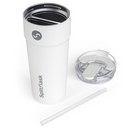
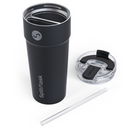
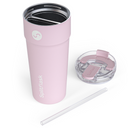
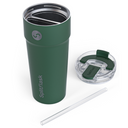
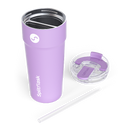
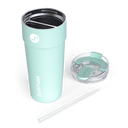
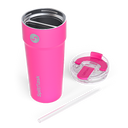
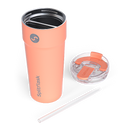
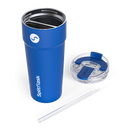
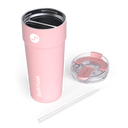
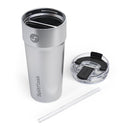
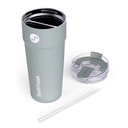
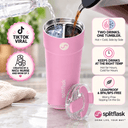
The practical friction is that "water all day" and "electrolytes when I need them" are two different drinks, and carrying two bottles is how one of them ends up left at home. A dual-chamber bottle like the Splitflask 2-in-1 tumbler holds both at once — plain water on one side for steady sipping, an electrolyte mix or cold brew on the other — which removes the choice you'd otherwise make at the door. Sip the water constantly; treat the second chamber as the thing you reach for on hot days, hard training days, or rough dosing weeks.
Keep it cold, too. Cold fluid is easier to keep drinking when nausea is in the picture, and a vacuum-insulated bottle holds that temperature through a full day without the drink going lukewarm and unappealing by 2pm.
FAQ
Can you drink alcohol on Ozempic or Wegovy?
Generally yes — there's no known direct interaction and no alcohol warning on the FDA-approved label. The risks are indirect: compounded low blood sugar if you take insulin, amplified nausea, and a pancreatitis concern with heavy drinking. Ask your prescriber about your own limit.
Does drinking more water help GLP-1 side effects?
Staying properly hydrated is standard advice for managing the constipation, dizziness, and fatigue that come with GLP-1 use, largely because the medications increase fluid loss while blunting thirst. It supports how you feel day to day; it isn't a treatment, and persistent side effects are worth reporting to your prescriber.
Should I drink electrolytes every day on a GLP-1?
Most people don't need to. Daily electrolyte supplementation makes more sense during vomiting or diarrhoea, heavy sweating, or when you're eating markedly less than before. If you have heart or kidney disease, check with your doctor first.
Do cutting mix drinks work like a GLP-1?
No. They're dietary supplements, not GLP-1 receptor agonists, and the research behind their main ingredients is limited and low quality compared with prescription medications. Some ingredients also interact with diabetes drugs, so raise them with your prescriber before trying one.
How do I know if I'm drinking enough water?
Check your urine colour rather than your thirst. Pale yellow indicates adequate hydration; dark urine or a strong odour suggests you're behind. This matters more on a GLP-1, where thirst is a less reliable signal than usual.
This article is general information, not medical advice. GLP-1 medications, alcohol limits, and supplement use should be discussed with the clinician who prescribes your treatment.