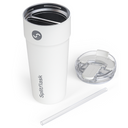
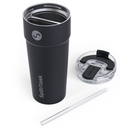
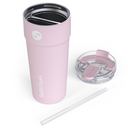
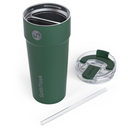
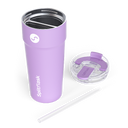
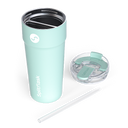
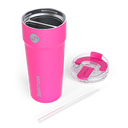
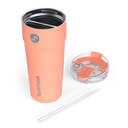
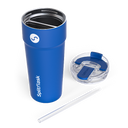
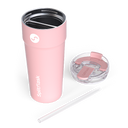
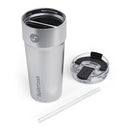
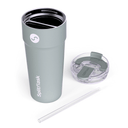
FREE COMFORT-GRIP HANDLE WITH EVERY CUP


The Splitflask guide
How Can You Stop Carrying Two Water Bottles?
The short answer
Use one true dual-chamber tumbler when you need two compatible drinks but do not want two separate containers. The right design gives each beverage its own compartment and drinking path, reducing the number of bottles you carry without combining the liquids.
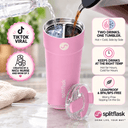

You can stop carrying two water bottles by using one true dual-chamber tumbler for two compatible drinks. Each beverage gets its own compartment and drinking path, so you reduce the number of containers in your hand or bag without pouring the liquids together.
This solution works best when the reason for carrying two bottles is separation: coffee beside water, electrolytes beside plain water, or another pairing that should remain distinct. If you carry two bottles because you need unusually high total capacity or because the drinks require different container types, one divided tumbler may not replace both.
Why do people end up carrying two bottles?
Most two-container routines begin with a practical conflict. One drink serves taste, caffeine, or workout preparation, while the other is plain water. Combining them would change the flavor, concentration, temperature, or purpose of each beverage.
That creates a predictable everyday-carry problem:
- Only one convenient hand is free.
- A vehicle or stroller has limited cup-holder space.
- Two vessels compete for room in a work or gym bag.
- One container gets left behind during a move between locations.
- Two lids, two bases, and two sets of parts need to be tracked.
What changes when two drinks share one exterior?
A dual-chamber tumbler combines the carrying footprint, but it does not combine the drinks. An internal divider creates two reservoirs, and a divided lid supplies separate drinking paths. That distinction is what makes the format different from mixing coffee with water or adding electrolyte powder to an entire bottle.
Splitflask divides a 30 oz body into two 15 oz chambers. The tradeoff is straightforward: each individual drink has less capacity than it might have in its own large bottle, but both travel in one cup-shaped vessel.
| Priority | Two separate bottles | One dual-chamber tumbler |
|---|---|---|
| Carry footprint | Two exteriors and two bases | One exterior and one base |
| Drink separation | Separate by default | Separate when chambers and lid paths are independent |
| Capacity flexibility | Each bottle can be a different size | Total capacity is divided between fixed chambers |
| Container tracking | Two items to pack and retrieve | One assembled item |
| Cleaning | Two bottles and lids | Two internal paths within one system |
When is a dual-chamber tumbler the better alternative?
It is particularly useful when the combined amount fits your routine and convenience matters more than maximizing each beverage. A commuter might want a moderate serving of coffee and water. A teacher or nurse may want both drinks available at one workstation. A gym user may want a prepared mix separate from plain water.
The format also helps when you repeatedly move between a car, desk, locker, classroom, or bag. One exterior is easier to account for, although it still needs to be carried upright and handled according to its instructions.
When should you keep using two containers?
- You need more of either beverage than one chamber provides.
- One drink is not approved for the divided bottle or lid.
- You need to hand one drink to another person.
- The two drinks require very different cleaning or handling routines.
- Your destination prohibits personal drinkware or requires a specific container.
- The combined vessel does not fit your holder, bag, or workspace.
Flying soon? Here's how TSA handles water bottles and tumblers at airport security.
How to simplify your two-drink routine
- Name the pairing. Decide which drink belongs in each chamber before filling.
- Check per-side capacity. Make sure the amount of each beverage is useful for the time between refills.
- Confirm compatibility. Follow the maker's current restrictions for temperature, carbonation, dairy, and other ingredients.
- Use the correct lid path. Align every seal and opening with its chamber.
- Pack consistently. Assign the same bag pocket or cup holder so the tumbler is easy to retrieve.
- Clean both sides. Even a chamber that held only water needs routine washing and complete drying.
What should you compare before replacing two bottles?
Look beyond the combined ounce number. Compare per-chamber capacity, base diameter, total height, weight when full, lid access, cleaning reach, material documentation, and seal assembly. Cup-holder fit varies by vehicle, and bag fit varies by pocket, so measure the places that matter in your routine.
If coffee and water are your main pairing, see the guide to carrying coffee and water in one tumbler. Drivers can also use the one-cup-holder checklist before choosing a size.
Frequently asked questions
Does one dual-chamber tumbler weigh less than two bottles?
Not necessarily. Weight depends on materials, capacity, lids, and how much liquid is inside. The consistent advantage is one carrying footprint, not a guaranteed weight reduction.
Can I carry two different cold drinks?
Yes, when both drinks are compatible with the product and each stays in its own chamber. Clean promptly after sugary or strongly flavored beverages.
Can one side stay empty?
Follow the product's current filling and use instructions. If the design permits one empty side, make sure the assembled lid remains correctly aligned and closed.
Will one tumbler fit every cup holder?
No. Measure the holder's usable diameter and depth, then compare them with the actual bottle dimensions. Nearby controls and lid clearance can matter as much as base width.
The bottom line
A dual-chamber tumbler is a practical alternative to two bottles when your main goal is keeping two compatible drinks separate in one footprint. Choose based on the amount you need in each side and the real places the vessel must fit.
Explore the Splitflask two-drink tumbler and current options.