FREE STANDARD US SHIPPING ON ALL TUMBLERS


The Splitflask guide
How Can You Carry Coffee and Water in One Tumbler?
The short answer
A true dual-chamber tumbler can carry coffee in one compartment and water in the other without mixing them. Look for separate liquid chambers, separate drinking paths, suitable insulation, leak-resistant seals, and cleaning access for both sides.
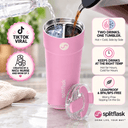

A true dual-chamber tumbler can carry coffee in one compartment and water in the other without mixing them. The body needs two separate liquid reservoirs and the lid needs two separate drinking paths; otherwise, the beverages still share one interior.
This pairing solves a common morning problem. Coffee and water serve different purposes and usually taste better when they remain distinct. A divided tumbler puts both in one cup-shaped exterior instead of asking you to balance a travel mug and a second bottle.
How can one tumbler keep coffee and water separate?
An internal stainless-steel divider forms two chambers from the base through the top of the vessel. The lid aligns an individual opening with each chamber. When the lid and seals are clean, undamaged, and assembled correctly, coffee stays on its side and water stays on the other.
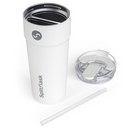
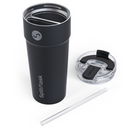
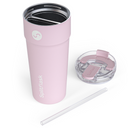
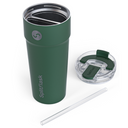
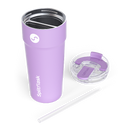
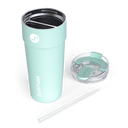
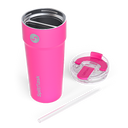
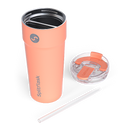
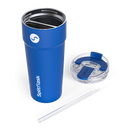
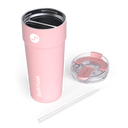
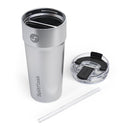
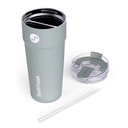
Splitflask uses two 15 oz chambers inside one 30 oz tumbler. You choose which side to sip, so carrying both drinks does not mean combining them or alternating between two containers.
Can the coffee be warm while the water stays cold?
Independent vacuum-insulated chambers are designed to limit direct temperature transfer. That makes a warm-and-cold pairing possible, but temperature still changes over time through the central divider, lid assembly, surrounding air, and repeated openings.
Starting temperature, fill level, ice, ambient conditions, and how often you drink from each side affect the result. A realistic comparison focuses on chamber separation and insulation construction rather than assuming an exact retention duration in every routine.
What should a coffee-and-water tumbler include?
| Feature | Why it matters |
|---|---|
| Two full liquid chambers | Keeps coffee out of the water supply |
| Separate lid pathways | Lets you select one beverage at a time |
| Documented hot-drink suitability | Confirms the intended lid and temperature use |
| Reachable seals and threads | Helps remove coffee oils and trapped residue |
| Useful per-side capacity | Shows how much coffee and water you actually get |
| Stable base and practical dimensions | Supports use at a desk or in a compatible cup holder |
How to build a simple coffee-and-water routine
- Assign each chamber. Use the same side for coffee so the routine and cleaning pattern stay predictable.
- Check the lid before filling. Make sure seals are present, clean, and aligned with the divider.
- Follow temperature instructions. Use only the temperatures and drinking path the manufacturer permits.
- Leave appropriate headspace. Do not overfill either chamber.
- Close both paths. Secure the lid according to the assembly directions before carrying it.
- Clean after use. Coffee residue should not remain in the chamber, threads, gasket, or drinking opening.
Who benefits from coffee and water in one cup?
Commuters and drivers
One convenient cup holder often has to serve both caffeine and hydration. A divided exterior can reduce the need to place a second container on a seat or in a less stable holder. Vehicle dimensions vary, so measure before assuming a fit.
Nurses, teachers, and shift workers
People who cannot step away whenever they want may prefer to bring both beverages to the workstation at once. One footprint can also reduce clutter, subject to workplace rules about where personal drinks may be stored.
Office and home-desk users
A single base leaves more room around electronics and papers than two separate cups. Leak-resistant seals help during ordinary use when correctly assembled, but all drinkware should still be placed carefully around equipment.
How do you prevent coffee flavor from affecting the water side?
The liquids are physically separate, but aroma can linger on shared exterior lid surfaces if coffee residue remains. Wash both drinking openings, removable seals, threads, and the lid area around the divider. Let every component dry completely before reassembly.
Use a soft brush that reaches the bottom and follow the product's current care directions. Avoid using a quick water rinse as a substitute for cleaning coffee oils. For persistent odor, use only cleaning methods approved for the vessel and its seals.
Is a divided tumbler better than two cups?
It depends on capacity and context. Two separate containers can provide more of each drink and allow one cup to be handed to someone else. One divided tumbler is more convenient when the serving size in each chamber is sufficient and reducing carry clutter is the priority.
For a broader comparison, see how a dual-chamber tumbler can replace two bottles.
Frequently asked questions
Does coffee mix with the water when I sip?
No, not when a true dual-chamber lid is correctly aligned and each opening serves only its chamber. You choose the coffee side or the water side.
Can I put coffee in both chambers?
If the product instructions permit coffee in either chamber, both sides can hold the same compatible drink. Remember that both chambers still need complete cleaning.
Can I use tea instead of coffee?
Yes, when the tumbler is approved for the tea's temperature. Sweeteners and added ingredients can increase residue, so clean promptly.
Does the tumbler fit every vehicle?
No. Cup-holder diameter, depth, nearby controls, and vertical clearance differ. Compare measurements rather than relying on a universal fit claim.
The bottom line
Coffee and water can travel in one tumbler when two real chambers continue through two drinking paths. The most important buying questions are per-side capacity, temperature suitability, cleaning access, seal assembly, and fit in your actual routine.