Free US shipping over $60


The Splitflask guide
Why Does My Water Taste Like Metal in a Stainless Steel Bottle?
The short answer
A metallic taste is not automatically coming from the stainless steel. New-product residue, mineral-rich water, trapped odor in the lid or gasket, and interior damage can all change flavor. Wash every part, test the same water in a glass, and inspect the bottle for rust, pitting, or exposed damaged surfaces.
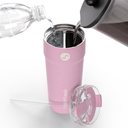

A clean, intact, food-grade stainless steel bottle should not make ordinary water taste strongly metallic. Before replacing it, isolate the cause: the water, a manufacturing or soap residue, yesterday's drink, the lid, and physical damage can produce similar symptoms.
Run this two-glass taste test
- Pour fresh water from one source into a clean glass.
- Pour the same water into the freshly cleaned bottle.
- Taste the glass first, then the open bottle without its lid if that is safe and practical.
- Install the clean lid and taste again through the normal drinking opening.
If the glass also tastes metallic, the water supply or plumbing may be responsible. If only the lidded bottle tastes odd, inspect the gasket, straw, and lid passages. If the open steel body changes the taste, repeat the full first-use wash and inspect the interior.
Common reasons water tastes metallic
| Possible cause | Clue | Next step |
|---|---|---|
| Minerals in the water | The same water tastes similar in glass | Try filtered water and, if needed, consult the water provider |
| New-product residue | The taste began on first use | Wash the body, lid, gasket, and straw according to the care guide |
| Soap left behind | Perfumed, bitter, or slick aftertaste | Rinse repeatedly with clean water |
| Old coffee or flavored-drink oils | Odor is strongest under the lid | Clean removable lid parts and use a permitted baking-soda soak |
| Damaged interior | Pitting, recurring rust, flaking, or a deep gouge | Stop use and contact the manufacturer |
How to clean a metallic taste out of the bottle
Wash with warm water, mild dish soap, and a soft bottle brush. Disassemble the lid only as instructed, wash the gasket on every side, then rinse until no soap remains. Let all components air-dry completely before reassembling.
For persistent odor or residue, use warm water with baking soda if the manufacturer permits it. Follow the recommended amount and soak time. Avoid steel wool, harsh abrasives, and chlorine bleach unless the exact product guide explicitly approves them.
Do not keep using a damaged interior. Cleaning cannot repair deep pitting, flaking material, a compromised liner, or recurring rust.
Is 18/8 stainless steel supposed to taste metallic?
“18/8” describes the approximate chromium and nickel composition of type 304 stainless steel. Those alloying elements help it form a corrosion-resistant passive surface. The label alone cannot prove workmanship or condition, but sound food-grade 18/8 steel should be neutral enough for everyday water use when properly cleaned.
Be cautious with vague material descriptions that do not identify food-grade stainless steel, and buy replacement lids or seals made for the exact model.
Frequently asked questions
Is metallic-tasting water unsafe?
Taste alone cannot diagnose safety. Stop using a visibly damaged bottle. If tap water tastes metallic in clean glassware too, contact the local water provider or an appropriate testing service rather than relying on taste.
Why does only the straw taste bad?
Residue can remain inside a narrow straw or valve. Clean it with a correctly sized soft brush, rinse, and replace a part that is damaged or cannot be cleaned.
Can I use vinegar on stainless steel?
Some makers permit a diluted white-vinegar cleaning step; others specify different care. Follow the exact product instructions, never mix vinegar with other cleaners, rinse thoroughly, and do not seal an active cleaning mixture.
Why are there white spots inside my bottle?
They may be mineral deposits from hard water rather than corrosion. Follow the maker's descaling guidance. Pits, flakes, or rust that returns after cleaning need manufacturer review.
The bottom line
Metallic taste often comes from water chemistry, residue, or the lid—not the steel itself. Compare the same water in glass, wash every component, rinse completely, and stop using a vessel with meaningful interior damage.
Material reference: British Stainless Steel Association, Selection of stainless steels for the food processing industries.