Free US shipping over $60


The Splitflask guide
Can I Put Lemon Water in My Stainless Steel Tumbler?
The short answer
Yes—ordinary lemon water is generally compatible with a clean, food-grade stainless steel tumbler. Quality 18/8 stainless steel is corrosion-resistant under normal drink use. Rinse it daily, avoid prolonged contact with highly concentrated acids or salty mixtures, and stop using a vessel with deep pitting, rust, or damaged interior surfaces.
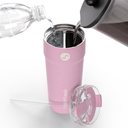
Adding lemon is a popular way to make plain water more appealing. The reassuring news is that diluted lemon juice and a sound food-grade stainless steel tumbler are generally a practical match for everyday use.
Does lemon water corrode stainless steel?
Lemons contain citric acid, but concentration, temperature, salt content, contact time, and steel grade all influence corrosion. The 18/8 stainless steel commonly used in quality drinkware is also known as type 304. It forms a thin passive surface layer that helps resist ordinary food and beverage acids.
The British Stainless Steel Association notes that types 304 and 316 are appropriate for most normal storage and handling concentrations of citric acid. That does not mean stainless steel is indestructible. Highly concentrated acid, chloride-rich or salty mixtures, harsh cleaners, high heat, deep surface damage, and very long contact can create different conditions from a bottle of diluted lemon water.
For normal use: fill with diluted lemon water, drink it the same day, rinse after use, and allow the bottle and lid to dry fully.
How to use lemon water in a stainless steel tumbler
- Start with clean food-grade steel. Follow the maker's first-use and care directions.
- Dilute the lemon. A few slices or a squeeze in water is different from storing concentrated lemon juice.
- Watch the extras. Salt, electrolyte powders, sweeteners, and other ingredients can change the mixture and leave residue.
- Use fresh slices carefully. Seeds and pulp can obstruct narrow straws or valves.
- Rinse the lid and gasket. Juice can collect where the steel body is not the issue.
- Air-dry with the lid off. A closed damp bottle encourages odor.
When should you stop using the tumbler?
Inspect the inside under bright light. Stop using it and contact the manufacturer if you find deep pitting, flaking material, a damaged interior surface, or rust that returns after proper cleaning. Also replace split or swollen seals that cannot be cleaned.
A few water spots are not automatically corrosion. Mineral deposits often look chalky or cloudy and may come from hard water. Clean according to the product guide before deciding the steel has failed.
Will lemon water taste metallic?
It should not have a strong metal taste in a clean, intact, food-grade stainless steel tumbler. If it does, compare the same lemon water in a glass. Then wash the bottle body, lid, straw, and gasket separately. Water chemistry, old residue, a new-product film, or a damaged surface may be responsible.
Do not try to mask a persistent unexplained taste with more lemon. Inspect the vessel and ask its maker for guidance.
Can lemon water help with a hydration routine?
Flavor can make water more enjoyable, which may make a routine easier to follow. Lemon is not a shortcut to a universal daily target, though. Fluid needs change with body size, activity, weather, pregnancy, diet, medications, and health conditions.
A practical strategy is to choose an appropriate goal, measure the container you actually use, and count refills. The planner on this page offers example 60oz, 90oz, and 120oz goals for convenience; those values are not personal medical advice.
Frequently asked questions
Can I leave lemon water in stainless steel overnight?
Occasional overnight contact with diluted lemon water is unlikely to harm intact quality stainless steel, but daily emptying, rinsing, and drying is the cleaner routine. Do not store concentrated juice or salty citrus mixtures for prolonged periods unless the manufacturer approves it.
Can I put lemon slices in a tumbler with a straw?
Yes, if pieces cannot block the straw or valve. Strain out seeds and loose pulp, and follow the lid maker's instructions.
What about lime, orange, or grapefruit water?
The same general guidance applies to diluted citrus water: use sound food-grade steel, rinse after use, clean the lid, and avoid prolonged storage of concentrated or salty mixtures.
Will lemon damage a silicone gasket?
Normal diluted lemon water should not usually damage a sound food-grade silicone seal, but residue can hold odor. Remove and wash the gasket only as the care instructions permit, and replace it if it becomes cracked, swollen, or loose.
The bottom line
You can normally put lemon water in an intact 18/8 stainless steel tumbler. Keep the mixture dilute, clean the body and lid each day, avoid harsh chloride cleaners, and investigate persistent rust, pitting, or unusual taste.
Material reference: British Stainless Steel Association, Selection of stainless steels for handling citric acid.