Free US shipping over $60


The Splitflask guide
Can You Put Soup or Hot Bone Broth in a Water Bottle?
The short answer
Only if the bottle maker approves hot liquids and the opening is suitable for the food. Smooth broth is easier and safer to pour than chunky soup, but it must stay at 140°F or above to remain hot-held safely. Otherwise, treat it as perishable and follow the two-hour rule before discarding.
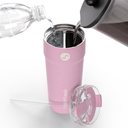

An insulated water bottle can sometimes carry smooth bone broth, but “can hold hot water” does not automatically mean “designed for soup.” The opening, lid, maximum temperature, ability to clean fats, and food-safety performance all matter.
When is a bottle suitable for hot broth?
Use it only when the manufacturer approves the complete bottle and lid for hot liquids. A wide, unobstructed opening is safer for pouring or sipping broth than a narrow straw or valve designed only for water. Chunky soup, noodles, and solids can block drinking passages and make thorough cleaning difficult.
Check these points before filling:
- The permitted beverage types include hot liquids.
- Your fill temperature is at or below the stated maximum.
- The closure vents and opens in a way that does not direct hot liquid toward your face.
- The mouth is appropriate for the broth's texture.
- You can reach every surface touched by fat or protein.
- The vessel has no damaged interior, loose seal, or clogged passage.
Important: Do not drink chunky soup through a straw or narrow spout. Solids can block the path, and a sudden release can cause a burn.
Keep broth out of the food-safety danger zone
Bone broth and soup are perishable foods. USDA guidance is to keep hot food at 140°F or above and cold food at 40°F or below. If broth spends more than two hours between those temperatures—or more than one hour when the surrounding temperature exceeds 90°F—discard it.
Insulation may keep broth pleasant to sip after it falls below 140°F. Pleasantly warm is not the same as safely hot-held. For a long carry, check with a clean food thermometer rather than relying on touch.
How to pack smooth broth
- Heat the broth thoroughly. Follow the preparation directions for the product or recipe.
- Preheat the approved vessel. If the care guide permits, warm it with hot water, then empty it before filling.
- Strain if needed. Remove bones, herbs, noodles, and solids that could obstruct the opening.
- Respect the fill line. Leave the required space and wipe the threads clean.
- Close carefully. Use the hot-drink lid specified by the maker and keep the container upright.
- Open away from your face. Hot liquid and steam can escape quickly.
- Apply the time rule. Track preparation time and discard broth that was not maintained at a verified safe temperature.
How to remove oily broth residue
Empty the vessel as soon as you finish. Wash it with warm water, mild dish soap, and a soft brush, then clean the lid, threads, and gasket separately as directed. Fat can become rancid and hold savory odor, so a water-only rinse is not enough.
Rinse thoroughly and air-dry with the lid off. Replace seals that stay greasy, swollen, cracked, or odorous after correct cleaning.
Broth and water in one daily routine
Broth can contribute fluid, but sodium and nutrition vary widely. It should not silently replace the plain water routine chosen for your needs. A separate water chamber makes it easier to see how much plain water you actually finish.
Frequently asked questions
Can I put chunky soup in a water bottle?
A water-bottle opening is usually a poor fit for chunks, noodles, or solids. Use a purpose-built wide-mouth food jar and utensil instead.
How long will bone broth stay safe?
There is no universal insulation time. It is safely hot-held while it remains at least 140°F. Once it enters the 40°F–140°F range, the USDA two-hour limit applies, shortened to one hour in ambient temperatures above 90°F.
Can I leave broth in the bottle overnight?
No, unless it has remained under verified refrigeration at 40°F or below. An insulated bottle sitting at room temperature is not a refrigerator.
Why did my bottle retain a soup smell?
Fat or protein may remain under the gasket or in a lid passage. Wash every approved removable part with dish soap, rinse completely, and dry separately.
The bottom line
Carry smooth broth only in a hot-liquid-approved vessel with an appropriate opening. Keep it at 140°F or hotter, or apply the USDA time limit once it cools into the danger zone. Avoid chunky soup in narrow passages and clean oily residue promptly.
Food-safety source: USDA Food Safety and Inspection Service, Danger Zone (40°F–140°F).