Free US shipping over $60


The Splitflask guide
Why Is My Insulated Tumbler Not Keeping Drinks Cold?
The short answer
The most common cause is a failed vacuum seal from a dent or drop. Two 60-second at-home tests confirm it — and here's what to check if the walls are fine.
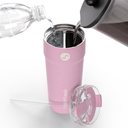
The most common reason an insulated tumbler stops keeping drinks cold is a failed vacuum seal — usually caused by a dent or a hard drop that lets air into the gap between the inner and outer walls. Once that vacuum is gone, heat transfers freely through the steel, and unfortunately the seal cannot be repaired. A worn lid gasket is the other frequent culprit.
The #1 cause: a broken vacuum seal
A broken vacuum seal is almost always why a tumbler that once held ice all day suddenly can't keep water cool past lunch. Vacuum-insulated tumblers are built from two stainless steel walls with the air pumped out of the space between them. Because a vacuum contains almost no air molecules, heat has no medium to conduct or convect through — that near-empty gap is what keeps cold in and warmth out.
When the bottle takes a hard hit, two things can go wrong. A deep dent can push the outer wall in until it touches the inner wall, creating a metal-on-metal bridge that conducts heat straight through. Worse, an impact can crack the weld that seals the vacuum chamber, letting air rush back into the gap. Either way, the insulation is permanently degraded: your drink is now separated from room temperature by little more than two thin layers of steel.
Not every ding is fatal. Small cosmetic dents from a bump against a table or a soft drop onto carpet usually leave the vacuum intact. The dents to worry about are the deep ones — typically from a drop onto concrete or tile — where the shape of the metal has visibly changed.
How to test if your vacuum seal has failed
You can confirm a failed vacuum seal at home in under a minute with two simple checks — no tools required.
- The touch test: Fill the tumbler with hot (not boiling-splash-dangerous) water, seal it, and wait a minute or two. If the outside of the tumbler feels noticeably warm, heat is crossing the wall and the vacuum is gone. A healthy vacuum tumbler stays cool to the touch no matter what's inside.
- The condensation test: Fill it with ice water and leave it on the counter for 10–15 minutes. If beads of condensation form on the outside — the way they would on a regular glass of ice water — cold is transferring through the walls and the seal has failed. An intact tumbler's exterior stays dry.
If your tumbler passes both tests, the vacuum is fine — and the real problem is probably sitting on top of it.
Other reasons your drinks warm up too fast
If the walls test healthy, the heat is getting in through the lid, or your habits are working against the insulation. Run through these in order:
A worn or dirty lid gasket
The rubber or silicone gasket inside the lid is the tumbler's weakest thermal point. Over months of use and washing, gaskets stretch, crack, and stop sealing, letting warm air leak in from the top. Pop the gasket out, check it for flat spots or splits, and make sure it's seated correctly after cleaning — a gasket reinstalled slightly askew performs almost as badly as a missing one. Most brands sell replacement gaskets and lids for a few dollars.
An open or vented lid
Sliding sip lids and straw lids trade insulation for convenience. An open straw hole is a permanent chimney for cold air to escape. If you're comparing your tumbler's performance against a friend's bottle with a fully sealed screw cap, that difference alone can account for hours of ice retention.
Skipping the pre-chill
Steel walls at room temperature will absorb cold from your drink before the insulation ever gets to do its job. Pre-chilling fixes this: fill the tumbler with ice water for a couple of minutes, dump it, then add your drink and fresh ice. (The same trick works in reverse for coffee — a minute of hot water pre-heat can extend heat retention noticeably.)
Heat-soaked storage
A tumbler left in a hot car starts the day with sun-baked walls, and even good insulation works both ways — it holds that heat in. Store it indoors and pre-chill before use on hot days.
Can a broken vacuum seal be fixed?
No — once the vacuum between the walls is compromised, it cannot be restored, at home or by the manufacturer. The vacuum is drawn and welded shut at the factory; there is no way to re-evacuate the chamber afterward. Popping a dent out with ice or suction may improve the bottle's looks, but it will not bring the insulation back if the seal cracked.
Before you bin it, check your warranty. Many reputable brands cover vacuum-seal failure that isn't drop-related, since a seal that fails without impact is usually a manufacturing defect. A tumbler with a dead vacuum still works fine as a regular (uninsulated) cup, but it will never hold ice like it used to.
How to protect the vacuum seal you still have
Prevention is the only cure, and it's mostly about avoiding hard impacts on hard floors. A silicone boot or protective sleeve absorbs the worst of a drop onto concrete for a few dollars. Don't toss a bare tumbler loose into a bag with heavy items, don't use the freezer to chill it (expanding ice can stress the inner wall — pre-chill with ice water instead), and check the care label before dishwashing: the heat won't break a factory weld on dishwasher-rated bottles, but it ages gaskets and finishes faster on models that aren't rated for it.
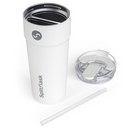
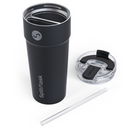
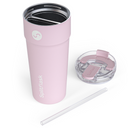
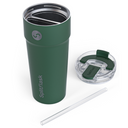
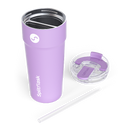
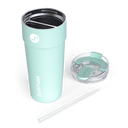
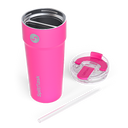
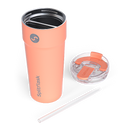
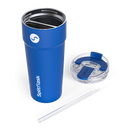
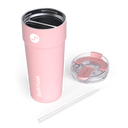
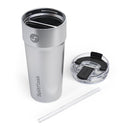
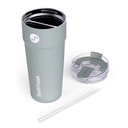
Good habits matter more when one bottle does two jobs. A dual-chamber design like the Splitflask 2-in-1 tumbler vacuum-insulates each chamber separately, which is why it can hold iced water on one side and hot coffee on the other — and it's also why the same care rules apply: one cracked seal means one chamber, not both, loses its insulation, but a sleeve and a soft landing are still cheaper than a replacement.
FAQ
Does a dent always ruin an insulated tumbler?
No. Small, shallow dents from everyday bumps usually leave the vacuum chamber intact. A dent only matters if it's deep enough to make the walls touch or crack the seal weld — if the tumbler still passes the touch and condensation tests, the insulation survived.
Why is there condensation on the outside of my tumbler?
Exterior condensation with a cold drink inside means cold is escaping through the walls, which points to a failed vacuum seal. An insulated tumbler with an intact vacuum keeps its outer wall at room temperature, so moisture never beads on it.
Will the dishwasher break my tumbler's vacuum seal?
Dishwasher heat won't crack a factory vacuum weld on bottles rated dishwasher-safe. On tumblers that aren't rated for it, repeated high-heat cycles can degrade the lid gasket, exterior finish, and adhesives faster — check your model's care instructions and hand-wash if in doubt.
How long should a healthy insulated tumbler keep drinks cold?
Most quality vacuum-insulated bottles with sealed lids are rated to keep drinks cold for roughly 24 hours and hot for 6–12. Tumblers with sip or straw lids run shorter. If yours falls hours below what it used to manage, test the vacuum seal.