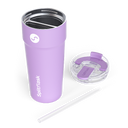
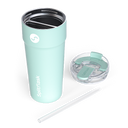
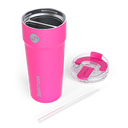
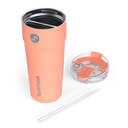
FREE COMFORT-GRIP HANDLE WITH EVERY CUP


The Splitflask guide
Can You Put Hot Drinks in a Stanley Cup? What Can (and Can't) Go In
The short answer
Yes, a Stanley Quencher's stainless body can hold a hot drink, but the cup is built for cold: Stanley publishes cold and iced retention for it, not hot, and its lid is splash-resistant, not leakproof. Here's what Stanley says about hot coffee, soda, milk, lemon and the freezer, plus the fix if you want hot and cold together.

Yes, you can put a hot drink in a Stanley Quencher's stainless steel body, but the Quencher is designed and marketed around cold drinks: Stanley publishes cold and iced retention for it, not hot, and its lid is described as splash-resistant rather than leakproof. If you drink hot coffee or tea from one, skip the straw, sip through the wide-mouth opening, keep it upright, and don't expect travel-mug heat retention. Below is what Stanley actually says about hot drinks, soda, milk, lemon and the freezer, and what to use if you want hot and cold on the same commute.
Quick note: this guide is published by Splitflask, which makes a dual-chamber tumbler. Stanley facts below come from Stanley's own product page and FAQ, checked in November 2026. Always follow the instructions for your exact cup and lid.
Can you put hot drinks in a Stanley cup?
The short answer: the cup can hold it, but the Quencher isn't the best tool for the job. Here's what Stanley's own Quencher H2.0 FlowState 40 oz product page lists:
- Cold retention: "Stays cold for 11 Hrs" and "Stays cold with ice for 2 Days."
- Hot retention: no figure is listed for the Quencher.
- Lid: "a straw opening, a wide mouth for drinking, and a full-cover top to resist splashes." That's splash resistance, not a leakproof seal.
- Body: 90% recycled 18/8 stainless steel, BPA-free.
So hot coffee won't hurt the steel, but three things work against you:
- The straw. A straw delivers liquid straight to the back of your mouth with no chance to test the temperature on your lips first. With a hot drink, that's a fast way to burn your tongue. Use the wide-mouth opening instead, and never sip a just-poured hot drink through a straw.
- The lid isn't sealed. A splash-resistant lid is fine upright in a cup holder. Tipped over in a tote with hot coffee inside? That's how laptops get baptized.
- No published hot spec. If you want coffee that's still hot hours later, choose a product the manufacturer actually rates for hot drinks, and check its stated hot-retention time. Stanley sells travel mugs and vacuum bottles built for that job.
If you do use it for hot drinks: Stanley's FAQ recommends preheating vacuum drinkware with warm tap water, then closing the lid quickly to reduce heat loss. Leave some room at the top, keep it upright, and let the drink cool to a comfortable sipping temperature before you drink.
Can you put soda or carbonated drinks in a Stanley cup?
Stanley's FAQ doesn't address carbonated drinks. What we can say from the lid design: because the Quencher lid has open drinking ports rather than a screw-down seal, it isn't going to trap carbonation the way a sealed can or bottle does. Expect soda or sparkling water to go flatter faster than in a sealed container, and to foam up through the straw if you pour or jostle it.
Some older blog posts (including an earlier version of this one) claimed a Stanley lid "preserves carbonation" with an airtight seal. Stanley doesn't describe the Quencher lid that way, so we've corrected it.
Sealed bottles are a different story: pressure can build. Some brands explicitly say no to fizz in their sealed bottles (Owala, for example, labels its stainless FreeSip "not for use with hot, carbonated, or perishable liquids"). For the full picture, read can you put carbonated drinks in a stainless steel bottle?
What can you put in a Stanley cup? A quick cheat sheet
| Drink | Verdict | What to know |
|---|---|---|
| Water and ice | Yes, its sweet spot | This is what the Quencher's published retention figures are about. |
| Iced coffee, iced tea | Yes | Rinse soon after so coffee and tea don't leave stains or smells. |
| Sports drinks and electrolytes | Yes | Sugary drinks get sticky; wash the straw and lid ports the same day. |
| Lemon water and citrus | Yes, with rinsing | 18/8 stainless handles everyday acidic drinks; just don't let them sit for days. See our lemon water in stainless steel answer. |
| Soda and sparkling water | Possible, not ideal | Not addressed in Stanley's FAQ; the open lid lets fizz escape and can foam through the straw. |
| Hot coffee and tea | Possible, with care | No hot-retention figure published for the Quencher; skip the straw and keep it upright. |
| Milk, lattes, protein shakes | Short-term only | Stanley says it doesn't recommend milk or dairy in its vacuum bottles for extended periods. More in our hot milk and lattes answer. |
Can a Stanley cup go in the fridge, freezer or dishwasher?
- Freezer: No. Stanley's FAQ says its products "are not freezer-safe" because expanding liquids can damage them.
- Fridge: Stanley's FAQ doesn't cover it. An insulated cup doesn't really need it either: pre-chill with ice water instead, as Stanley suggests for precooling.
- Dishwasher: Stanley lists the Quencher H2.0 as dishwasher safe. For other models, its FAQ says to check the bottom of the product and use the top rack.
The real problem: you want hot coffee and cold water
Here's the thing most "what can go in my Stanley" searches are really about: it's 6:45 a.m., you want hot coffee, you also want ice water for the rest of the day, and you have one cup holder and zero free hands. A single-chamber cup makes you pick one personality. You have two.

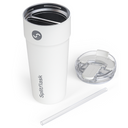
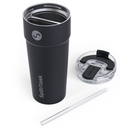
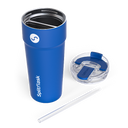
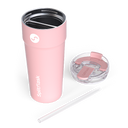
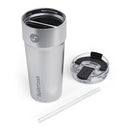
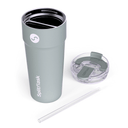
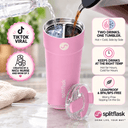
That's the job the Splitflask 30oz Dual-Chamber Tumbler was designed for by a NICU nurse who was tired of juggling two containers:
- Two sealed 15oz chambers, so coffee and water never mix.
- Independent vacuum insulation on a divided 18/8 stainless steel interior to limit temperature transfer between sides.
- A spout for the hot side and a straw for the cold side, so you're not sipping hot coffee through a straw.
- Cup-holder-friendly shape that fits most standard cup holders (exact fit varies by vehicle).
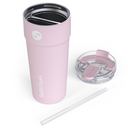
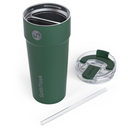
- Patented design (US Patent No. 12,577,032 B2), $54.99, in colors from Elle Pink to Royceton Sage.
Who Splitflask is NOT for: if you want one giant cold drink all day, a 40 oz single-chamber tumbler like the Quencher simply holds more water between refills; each Splitflask side holds 15oz. And if you only ever drink one thing, you don't need two chambers. We break the trade-offs down honestly in Splitflask vs Stanley: which tumbler is better for you?
Still deciding between brands? Here is our YETI vs Stanley vs Hydro Flask comparison for hot and cold drinks.
Stanley cup FAQ
Can I put hot tea in my Stanley cup?
The stainless body can hold it, but the Quencher has no published hot-retention figure and its lid is splash-resistant, not leakproof. Drink through the wide-mouth opening, not the straw, and keep it upright.
Can you drink hot drinks through a Stanley straw?
We don't recommend it. A straw sends hot liquid straight past your lips before you can judge the temperature. Use a lid with a sip opening for anything hot.
Can you put carbonated drinks in a Stanley cup?
Stanley's FAQ doesn't address it. The Quencher's open lid won't hold fizz well and drinks can foam through the straw, so it's possible but not ideal. Sealed bottles need extra caution because pressure can build.
Can I put milk or a latte in my Stanley?
For a short commute, yes. Stanley says it doesn't recommend milk or dairy in its vacuum bottles for extended periods, so drink it promptly and wash it the same day.
Can I put alcohol in a Stanley cup?
Check local rules first, then see our answer on alcohol and mixed drinks in stainless steel.
The bottom line
A Stanley Quencher is a great cold-drink cup that can tolerate a careful hot drink. If your mornings need coffee hot and water cold at the same time, stop forcing one cup to have two personalities and give each drink its own chamber.